Cloud computing has transformed how businesses operate, and MS Azure stands at the forefront of this revolution. With unmatched scalability, security, and integration, it’s no wonder enterprises worldwide are making the switch. Let’s dive into what makes MS Azure a game-changer.
What Is MS Azure and Why It Matters

Microsoft Azure, commonly referred to as MS Azure, is a comprehensive cloud computing platform developed by Microsoft. Launched in 2010, it offers over 200 services ranging from virtual computing and storage to AI, machine learning, and Internet of Things (IoT) solutions. Unlike traditional on-premise infrastructure, MS Azure enables organizations to scale resources on demand, reduce capital expenditure, and accelerate innovation.



The Evolution of MS Azure
MS Azure began as a platform for hosting web applications under the name “Windows Azure.” Over the years, it evolved into a full-fledged cloud ecosystem. In 2014, Microsoft rebranded it to Microsoft Azure to reflect its broader capabilities beyond Windows-based services. Today, it supports multiple operating systems, programming languages, and frameworks, making it a truly open and hybrid-ready platform.
- 2010: Launched as Windows Azure for cloud-hosted applications.
- 2014: Rebranded to Microsoft Azure with expanded services.
- 2018: Became the first cloud provider compliant with GDPR.
- 2020: Surpassed $50 billion in annual revenue, showcasing rapid enterprise adoption.
Core Components of MS Azure
MS Azure is built on a global network of data centers managed by Microsoft. These components work together to deliver seamless cloud experiences:
- Compute: Virtual machines, containers, serverless functions (Azure Functions), and batch processing.
- Storage: Blob, file, queue, and table storage with geo-redundancy options.
- Networking: Virtual networks, load balancers, DNS, and content delivery networks (CDN).
- Databases: Azure SQL Database, Cosmos DB, MySQL, and PostgreSQL.
- Security & Identity: Azure Active Directory, Key Vault, and Security Center.
“Azure is not just a cloud platform; it’s a catalyst for digital transformation.” — Satya Nadella, CEO of Microsoft
Key Benefits of Using MS Azure
Organizations adopt MS Azure for its robust feature set and tangible business advantages. From startups to Fortune 500 companies, the platform delivers measurable ROI through flexibility, performance, and integration.
Scalability and Flexibility
One of the standout features of MS Azure is its ability to scale resources up or down based on demand. Whether you’re running a small web app or a global e-commerce platform, Azure automatically adjusts compute power, storage, and bandwidth. This elasticity ensures optimal performance during traffic spikes without over-provisioning.
For example, during Black Friday sales, retailers can scale their Azure-hosted websites to handle millions of concurrent users, then scale back post-event to save costs. This pay-as-you-go model eliminates the need for expensive hardware investments.
Cost Efficiency and Pay-as-You-Go Pricing
MS Azure operates on a consumption-based pricing model. You only pay for what you use, which is a major shift from traditional IT budgets. Azure offers several pricing tiers, including free accounts, pay-as-you-go, and enterprise agreements.
- Free Tier: Includes 12 months of popular services and $200 credit for new users.
- Reserved Instances: Save up to 72% by committing to 1- or 3-year terms.
- Hybrid Benefit: Use existing Windows Server licenses to reduce VM costs by up to 40%.
Tools like the Azure Pricing Calculator help estimate costs before deployment, ensuring transparency and budget control.
Global Reach and High Availability
MS Azure operates in 60+ regions worldwide, more than any other cloud provider. This global footprint allows businesses to deploy applications closer to their users, reducing latency and improving performance.
Each region has multiple data centers with redundancy, ensuring high availability. Azure guarantees 99.9% uptime for most services, with financial backing through Service Level Agreements (SLAs). For mission-critical applications, geo-replication and disaster recovery options like Azure Site Recovery provide additional resilience.
MS Azure vs. Competitors: How It Stands Out
The cloud market is dominated by three major players: MS Azure, Amazon Web Services (AWS), and Google Cloud Platform (GCP). While all offer robust services, MS Azure differentiates itself in key areas.
Hybrid Cloud Leadership
MS Azure excels in hybrid cloud environments—where businesses use both on-premise and cloud infrastructure. Azure Stack allows organizations to run Azure services in their own data centers, enabling seamless integration between on-prem and cloud workloads.
This is particularly valuable for industries like finance and healthcare, where regulatory requirements demand data sovereignty. AWS offers Outposts, and GCP has Anthos, but Azure’s hybrid integration is widely regarded as the most mature and enterprise-friendly.
Seamless Microsoft Ecosystem Integration
If your organization already uses Microsoft products like Office 365, Dynamics 365, or Windows Server, MS Azure provides unmatched integration. For example:
- Azure Active Directory syncs with on-premise Active Directory for unified identity management.
- Power BI can pull data directly from Azure SQL databases for real-time analytics.
- Teams and SharePoint can be backed up and scaled using Azure storage.
This ecosystem synergy reduces complexity, lowers training costs, and accelerates deployment timelines.
Market Share and Enterprise Adoption
According to Synergy Research Group (2023), AWS leads with 32% market share, followed by MS Azure at 23%, and GCP at 10%. However, Azure is growing faster in enterprise segments, especially in government and large corporations.
Microsoft’s strong relationships with enterprise clients, combined with its licensing models (e.g., Enterprise Agreements), make Azure a preferred choice for large-scale digital transformation projects. Additionally, Azure is the only cloud provider with compliance certifications in over 100 countries, including FedRAMP, HIPAA, and ISO standards.
Core Services Offered by MS Azure
MS Azure provides a vast array of services across multiple domains. Understanding these core offerings helps organizations choose the right tools for their needs.
Compute Services: Virtual Machines and Containers
Azure Virtual Machines (VMs) allow users to deploy Windows or Linux-based servers in the cloud. These VMs can be scaled manually or automatically based on CPU usage, network traffic, or custom metrics.
For containerized applications, Azure Kubernetes Service (AKS) simplifies orchestration. AKS automates deployment, scaling, and management of containerized apps using Kubernetes. It integrates with DevOps pipelines, enabling continuous integration and delivery (CI/CD).
Additionally, Azure Container Instances (ACI) offer a serverless option for running containers without managing clusters—ideal for short-lived tasks or microservices.
Storage Solutions: Blob, Disk, and Archive
MS Azure offers multiple storage types tailored to different use cases:
- Blob Storage: For unstructured data like images, videos, and backups. Offers hot, cool, and archive tiers based on access frequency.
- Disk Storage: High-performance SSDs and HDDs attached to VMs for OS and application data.
- File Storage: Fully managed file shares accessible via SMB or NFS protocols.
- Queue and Table Storage: Lightweight messaging and NoSQL storage for scalable applications.
Data redundancy options include LRS (Locally Redundant Storage), ZRS (Zone-Redundant), and GRS (Geo-Redundant), ensuring durability even during regional outages.
Networking and Security Features
Azure Virtual Network (VNet) enables secure communication between cloud resources, on-premise networks, and the internet. Features like Network Security Groups (NSGs) act as firewalls, controlling inbound and outbound traffic.
Azure Firewall is a managed, cloud-native firewall service with built-in threat intelligence. It supports FQDN filtering, intrusion detection, and encryption inspection.
For secure remote access, Azure offers:
- VPN Gateway: Site-to-site or point-to-site encrypted connections.
- ExpressRoute: Private, high-speed connections from on-premise to Azure, bypassing the public internet.
- DDoS Protection: Mitigates distributed denial-of-service attacks with real-time monitoring.
AI and Machine Learning Capabilities in MS Azure
MS Azure is a leader in democratizing artificial intelligence. Its AI and machine learning tools empower developers and data scientists to build intelligent applications without deep expertise in data science.
Azure Cognitive Services
Azure Cognitive Services are pre-built APIs that add AI capabilities to applications. These include:
- Computer Vision: Analyze images for objects, faces, text, and emotions.
- Speech Services: Convert speech to text and vice versa, with real-time translation.
- Language Understanding (LUIS): Build chatbots with natural language processing.
- Translator Text: Support for over 60 languages in real time.
- Face API: Detect, identify, and verify human faces in photos.
These services are used in customer service chatbots, accessibility tools, and content moderation systems. For example, a retail app can use Computer Vision to let users search for products by uploading photos.
Azure Machine Learning Studio
Azure Machine Learning is a cloud-based environment for training, deploying, and managing ML models. It supports both code-first (Python, R) and drag-and-drop (no-code) workflows.
Key features include:
- Automated ML: Automatically tests algorithms and hyperparameters to find the best model.
- ML Pipelines: Orchestrate data preparation, training, and deployment steps.
- Model Registry: Track versions, performance, and deployment status.
- Integration with MLOps: Monitor models in production and retrain when performance degrades.
Data scientists can use Jupyter notebooks within Azure ML Studio, and models can be deployed as web services accessible via REST APIs.
Real-World AI Applications on MS Azure
Organizations are leveraging Azure AI in innovative ways:
- Healthcare: Mayo Clinic uses Azure AI to analyze medical images and predict patient outcomes.
- Retail: Walmart uses Azure Cognitive Services for inventory management via image recognition.
- Manufacturing: Rolls-Royce uses Azure IoT and ML to monitor jet engine performance in real time.
- Finance: JPMorgan Chase uses Azure ML to detect fraudulent transactions.
These examples illustrate how MS Azure is not just a technical platform but a strategic enabler of business innovation.
Security and Compliance in MS Azure
In an era of increasing cyber threats, security is paramount. MS Azure provides a multi-layered security model that protects data, applications, and infrastructure.
Built-In Security Tools and Best Practices
Azure Security Center (now part of Microsoft Defender for Cloud) offers unified security management and advanced threat protection. It continuously assesses your environment and provides recommendations like:
- Enable disk encryption on VMs.
- Install vulnerability scanners.
- Configure just-in-time VM access to reduce exposure.
Microsoft Defender for Cloud extends protection to servers, containers, SQL databases, and even on-premise machines via hybrid agents.
Azure Key Vault securely stores secrets, keys, and certificates. Applications can retrieve them at runtime without hardcoding sensitive data.
Compliance and Data Governance
MS Azure complies with a broad range of international and industry-specific standards, including:
- GDPR (General Data Protection Regulation)
- HIPAA (Health Insurance Portability and Accountability Act)
- FISMA (Federal Information Security Management Act)
- ISO 27001, 27017, 27018
- SOC 1, SOC 2, SOC 3
The Microsoft Compliance Manager helps organizations assess their compliance posture and generate audit reports.
Data residency is another key feature—customers can choose where their data is stored and processed, ensuring adherence to local laws.
Identity and Access Management with Azure AD
Azure Active Directory (Azure AD) is Microsoft’s cloud-based identity and access management service. It enables single sign-on (SSO), multi-factor authentication (MFA), and conditional access policies.
For example, an organization can enforce a policy that requires MFA when users log in from outside the corporate network or when accessing sensitive applications like financial systems.
Azure AD also supports identity governance, allowing administrators to assign, review, and revoke access rights automatically. This reduces the risk of privilege creep and insider threats.
Getting Started with MS Azure: A Practical Guide
Starting with MS Azure doesn’t have to be overwhelming. Whether you’re a developer, IT admin, or business leader, there’s a clear path to adoption.
Creating Your First Azure Account
To get started, visit Azure Free Account and sign up with a Microsoft account. You’ll receive:
- $200 credit to use in the first 30 days.
- Access to over 25 always-free services (e.g., 750 hours of VM usage per month).
- Free access to popular services like Azure Functions and Blob Storage for 12 months.
No credit card is required for the free tier, making it risk-free to explore.
Navigating the Azure Portal
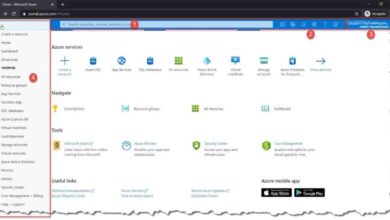
The Azure Portal (portal.azure.com) is the web-based interface for managing all Azure resources. Its dashboard is customizable, allowing users to pin frequently used services.
Key areas include:
- Resource Groups: Logical containers for organizing related resources (e.g., all components of a web app).
- Marketplace: Deploy pre-configured solutions like WordPress, Docker, or SAP.
- Monitor: View logs, metrics, and alerts for performance and troubleshooting.
- Cost Management: Track spending, set budgets, and receive alerts when thresholds are exceeded.
Deploying Your First Application
Let’s walk through deploying a simple web app:
- Log in to the Azure Portal.
- Click “Create a resource” and search for “App Service”.
- Configure the app name, runtime stack (e.g., .NET, Node.js), and region.
- Choose a pricing tier (start with Free or Shared).
- Click “Review + create”, then “Create”.
- Once deployed, upload your code via FTP, Git, or Azure DevOps.
- Your app will be live at
https://your-app-name.azurewebsites.net.
This process takes less than 10 minutes and demonstrates Azure’s ease of use for developers.
Future Trends and Innovations in MS Azure
MS Azure is not standing still. Microsoft continues to invest heavily in innovation, positioning Azure as a leader in next-generation technologies.
Edge Computing with Azure IoT Edge
Azure IoT Edge brings cloud intelligence to edge devices. Instead of sending all data to the cloud, processing happens locally on devices like sensors, cameras, or industrial machines.
For example, a factory can use Azure IoT Edge to detect equipment anomalies in real time and trigger maintenance alerts—reducing downtime and bandwidth usage.
This is crucial for applications requiring low latency, such as autonomous vehicles or remote surgery robots.
Quantum Computing with Azure Quantum
Azure Quantum is a full-stack cloud ecosystem for quantum computing. While still in early stages, it allows researchers and developers to experiment with quantum algorithms using hardware from partners like IonQ and Quantinuum.
Though practical applications are years away, Azure Quantum is preparing organizations for a future where quantum computers solve problems beyond classical computing—like drug discovery and complex optimization.
Sustainability and Green Cloud Initiatives
Microsoft has committed to being carbon negative by 2030 and removing all historical emissions by 2050. Azure plays a key role in this mission.
Azure data centers use renewable energy, advanced cooling systems, and AI-driven efficiency tools. The Azure Sustainability Calculator helps customers estimate the carbon footprint of their workloads and compare it to on-premise alternatives.
By migrating to Azure, organizations can reduce their carbon emissions by up to 93% compared to traditional data centers.
What is MS Azure?
MS Azure is Microsoft’s cloud computing platform that provides servers, storage, databases, networking, analytics, and software services over the internet. It enables businesses to build, deploy, and manage applications at scale.
How does MS Azure pricing work?
MS Azure uses a pay-as-you-go model. You pay only for the resources you consume. Pricing varies by service, region, and usage. Free tiers and reserved instances help reduce costs.
Is MS Azure better than AWS?
It depends on your needs. MS Azure excels in hybrid cloud and Microsoft ecosystem integration, while AWS has broader service variety. Many enterprises use both in a multi-cloud strategy.
Can I use MS Azure for AI and machine learning?
Yes. MS Azure offers powerful AI tools like Cognitive Services, Azure Machine Learning, and Bot Framework, making it easy to add intelligence to applications.
How secure is MS Azure?
MS Azure is one of the most secure cloud platforms, with built-in encryption, threat detection, compliance certifications, and identity management via Azure AD.
MS Azure has firmly established itself as a leader in the cloud computing space. Its combination of scalability, security, hybrid capabilities, and AI integration makes it a top choice for modern businesses. Whether you’re migrating legacy systems, building new apps, or exploring AI, MS Azure provides the tools and infrastructure to succeed. With continuous innovation in quantum computing, edge AI, and sustainability, Microsoft is shaping the future of cloud technology. The journey to the cloud starts with a single step—and MS Azure makes that step easier, smarter, and more powerful than ever.
Further Reading: