Cloud computing has reshaped how businesses operate, and msft azure stands at the forefront of this revolution. As Microsoft’s cloud platform, it offers unmatched scalability, security, and integration—making it a top choice for enterprises worldwide.
What Is msft azure and Why It Matters

Microsoft Azure, commonly referred to as msft azure, is a comprehensive cloud computing platform launched by Microsoft in 2010. It provides over 200 services, including computing, analytics, storage, networking, and more—all accessible via the internet. Unlike traditional on-premise infrastructure, msft azure enables organizations to scale resources on demand, reducing costs and increasing agility.
Origins and Evolution of msft azure
msft azure began as Windows Azure in 2010, primarily focused on application hosting. Over the years, it evolved into a full-fledged cloud ecosystem. By 2014, Microsoft rebranded it to Microsoft Azure, signaling its expansion beyond Windows-centric services to support Linux, open-source tools, and hybrid environments.
- 2010: Launch as Windows Azure with basic PaaS capabilities
- 2014: Rebranded to Microsoft Azure; added IaaS and broader OS support
- 2018: Became the first cloud provider compliant with GDPR
- 2020: Surpassed $20 billion in annual revenue
- 2023: Powers over 95% of Fortune 500 companies
“Azure isn’t just a cloud platform—it’s a strategic enabler for digital transformation.” — Satya Nadella, CEO of Microsoft
Core Components of msft azure
msft azure is built around four primary service models: Infrastructure as a Service (IaaS), Platform as a Service (PaaS), Software as a Service (SaaS), and Serverless computing. Each model serves different business needs, from full infrastructure control to rapid application development.
- IaaS: Virtual machines, storage, and networking (e.g., Azure VMs)
- PaaS: Development platforms like Azure App Services and Azure SQL Database
- SaaS: Ready-to-use applications such as Microsoft 365
- Serverless: Azure Functions for event-driven computing
These components allow businesses to mix and match services based on their technical requirements and operational goals.
Global Infrastructure and Data Centers
msft azure operates in 66+ regions worldwide, more than any other cloud provider. This global footprint ensures low latency, high availability, and compliance with local data regulations. Regions are grouped into geographic areas such as Europe, Asia-Pacific, and North America, each with multiple availability zones for redundancy.
For example, Azure’s data centers in Germany are operated by a German data trustee (T-Systems), ensuring compliance with strict EU privacy laws. This unique model, known as the Microsoft Cloud Germany, gives customers enhanced control over their data.
Key Benefits of Using msft azure
Organizations adopt msft azure not just for its technical capabilities but for the strategic advantages it delivers. From cost savings to innovation acceleration, the platform empowers businesses to stay competitive in a fast-changing digital landscape.
Cost Efficiency and Pay-as-You-Go Pricing
One of the biggest advantages of msft azure is its flexible pricing model. Instead of investing in expensive hardware, companies pay only for the resources they consume. Azure offers several pricing tiers, including pay-as-you-go, reserved instances, and spot pricing for non-critical workloads.
- Pay-as-you-go: Ideal for startups and variable workloads
- Reserved Instances: Up to 72% discount for 1-3 year commitments
- Spot VMs: Up to 90% off for interruptible tasks like batch processing
The Azure Pricing Calculator helps organizations estimate costs before deployment, reducing financial uncertainty.
Scalability and Elasticity
msft azure allows automatic scaling based on traffic or workload demands. For instance, an e-commerce site can scale up during Black Friday and scale down afterward—without manual intervention. This elasticity ensures optimal performance while minimizing waste.
Azure Autoscale can be configured using rules based on metrics like CPU usage, memory, or queue length. It supports both vertical scaling (changing VM size) and horizontal scaling (adding more instances).
Hybrid Cloud Capabilities
Unlike some competitors, msft azure excels in hybrid environments—where on-premise systems integrate with the cloud. Azure Stack, for example, brings Azure services into private data centers, enabling consistent management across environments.
This is especially valuable for industries like finance and healthcare, where regulatory requirements limit full cloud migration. With msft azure, organizations can maintain compliance while gaining cloud benefits.
msft azure vs. AWS vs. Google Cloud: A Comparative Analysis
While Amazon Web Services (AWS) leads in market share, msft azure has carved out a strong position by leveraging Microsoft’s enterprise relationships and integration with existing products like Windows Server and Active Directory.
Market Share and Enterprise Adoption
According to Synergy Research Group (2023), AWS holds 32% of the cloud market, followed by msft azure at 23%, and Google Cloud at 11%. However, Azure dominates in enterprise adoption due to its deep integration with Microsoft 365, Dynamics 365, and .NET frameworks.
Many large corporations already use Microsoft products, making msft azure a natural extension. This reduces training costs and accelerates cloud migration.
Integration with Microsoft Ecosystem
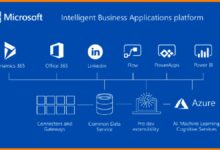
msft azure seamlessly integrates with Microsoft tools such as:
- Active Directory → Azure Active Directory (now Microsoft Entra ID)
- Office 365 → Secure collaboration with Azure Information Protection
- Power BI → Advanced analytics powered by Azure Synapse
- Teams → Backend infrastructure hosted on Azure
This tight integration reduces friction and enhances productivity, giving msft azure a competitive edge in corporate environments.
AI and Machine Learning Leadership
msft azure has made significant investments in artificial intelligence. Azure AI services offer pre-built models for vision, speech, language, and decision-making. For example, Azure Cognitive Services enable developers to add facial recognition or sentiment analysis to apps without deep AI expertise.
Azure Machine Learning provides a full lifecycle platform for building, training, and deploying ML models. It supports popular frameworks like TensorFlow, PyTorch, and scikit-learn, and integrates with MLOps for automated model management.
Microsoft’s partnership with OpenAI—investing over $10 billion—has further strengthened its AI capabilities. Azure now hosts OpenAI’s models, including GPT-4, making it the exclusive cloud provider for OpenAI’s enterprise services.
Security and Compliance in msft azure
Security is a top priority for any cloud platform, and msft azure delivers robust protections across physical, network, and application layers.
Built-In Security Features
msft azure includes multiple layers of security:
- Azure Security Center: Unified security management and advanced threat protection
- Azure Firewall: Managed, cloud-native firewall service
- DDoS Protection: Defends against distributed denial-of-service attacks
- Private Link: Secure access to services without public IPs
These tools help detect, prevent, and respond to threats in real time.
Compliance and Certifications
msft azure complies with over 140 international and industry-specific standards, including:
- GDPR (General Data Protection Regulation)
- ISO/IEC 27001, 27017, 27018
- HIPAA (Health Insurance Portability and Accountability Act)
- SOC 1, SOC 2, SOC 3
- PCI DSS (Payment Card Industry Data Security Standard)
This makes msft azure suitable for highly regulated sectors like banking, healthcare, and government.
Zero Trust Architecture Support
msft azure supports Zero Trust security models, which assume no user or device is trusted by default—even inside the network. Key components include:
- Multi-factor authentication (MFA) via Azure AD
- Conditional access policies
- Device compliance checks
- Just-in-time (JIT) VM access
Microsoft’s Zero Trust deployment guide helps organizations implement these principles step by step.
Innovation and Emerging Technologies on msft azure
msft azure isn’t just about hosting applications—it’s a platform for innovation. From quantum computing to edge AI, Microsoft is pushing the boundaries of what’s possible in the cloud.
Azure AI and OpenAI Integration
The integration of OpenAI models into msft azure has opened new possibilities for enterprises. Companies can now build intelligent applications that understand natural language, generate content, or automate customer service—all within a secure, compliant environment.
For example, GitHub Copilot, powered by OpenAI’s Codex model and hosted on Azure, helps developers write code faster by suggesting entire lines or functions.
Microsoft also launched Azure OpenAI Service, allowing businesses to access GPT models with enterprise-grade security and support.
Internet of Things (IoT) and Edge Computing
msft azure offers Azure IoT Hub, a managed service that connects, monitors, and manages billions of IoT devices. Combined with Azure IoT Edge, organizations can run AI models directly on devices at the edge—reducing latency and bandwidth usage.
Use cases include:
- Predictive maintenance in manufacturing
- Smart retail with real-time inventory tracking
- Connected healthcare devices for remote monitoring
Azure Percept, an end-to-end AI platform for vision and speech, simplifies IoT development for non-experts.
Quantum Computing with Azure Quantum
Azure Quantum is Microsoft’s cloud-based quantum computing service. While still in early stages, it allows researchers and developers to experiment with quantum algorithms using hardware from partners like IonQ, Quantinuum, and Rigetti.
Though practical quantum computers are years away, Azure Quantum provides a sandbox for future innovation in fields like cryptography, drug discovery, and optimization problems.
Real-World Use Cases of msft azure
msft azure powers a wide range of industries, from retail to aerospace. Its flexibility makes it suitable for both startups and global enterprises.
Healthcare: Enhancing Patient Care with Azure
Hospitals and clinics use msft azure to store electronic health records securely, analyze medical images with AI, and enable telemedicine platforms. For example, Philips uses Azure to power its IntelliSpace Critical Care platform, improving ICU patient outcomes through real-time data analytics.
Azure Health Data Services supports FHIR (Fast Healthcare Interoperability Resources), enabling seamless data exchange between systems.
Finance: Secure and Scalable Banking Solutions
Banks like JPMorgan Chase and HSBC rely on msft azure for fraud detection, risk modeling, and customer service automation. Azure’s compliance certifications ensure data protection, while AI models analyze transactions in real time to flag suspicious activity.
HSBC migrated over 300 applications to Azure, reducing infrastructure costs by 40% and improving system reliability.
Retail: Personalizing Customer Experiences
Retailers like Walmart and ASOS use msft azure to power recommendation engines, manage supply chains, and run online storefronts. Azure Cognitive Search enables fast, personalized product discovery, while Azure Databricks analyzes customer behavior for targeted marketing.
During peak seasons, these retailers scale up instantly to handle traffic spikes—ensuring smooth shopping experiences.
Getting Started with msft azure: A Practical Guide
Starting with msft azure doesn’t require a massive investment. Microsoft offers free tools, credits, and learning resources to help beginners get up to speed.
Creating Your First Azure Account
You can sign up for a free msft azure account at azure.microsoft.com/free. The free tier includes:
- 12 months of popular services like VMs and Blob Storage
- $200 in credit for use within the first 30 days
- Access to over 25 always-free services
No credit card is required for the basic free account, making it risk-free to explore.
Navigating the Azure Portal
The Azure Portal (portal.azure.com) is the web-based interface for managing resources. It features a dashboard, resource groups, and a search bar for quick access. New users should start by creating a resource group—a logical container for related services like VMs, databases, and networks.
Azure CLI and PowerShell are also available for automation and scripting.
Recommended Learning Paths
Microsoft Learn (learn.microsoft.com) offers free, interactive modules for all skill levels. Popular paths include:
- Azure Fundamentals (AZ-900 certification)
- Azure Administrator (AZ-104)
- Azure Developer (AZ-204)
- Azure Security Engineer (AZ-500)
These courses combine videos, hands-on labs, and quizzes to build practical skills.
Future Trends Shaping msft azure
As technology evolves, so does msft azure. Microsoft continues to innovate in areas like sustainability, AI democratization, and decentralized identity.
Sustainable Cloud Computing
Microsoft has committed to being carbon negative by 2030 and removing all historical emissions by 2050. msft azure data centers are powered by renewable energy, and the company invests in carbon capture technologies.
Azure Sustainability Calculator helps organizations measure the carbon footprint of their cloud usage and compare it to on-premise alternatives.
Democratizing AI and Low-Code Development
msft azure is making AI accessible to non-developers through tools like Azure Cognitive Services and Power Platform. Power Apps and Power Automate allow business users to build apps and workflows with minimal coding.
This democratization accelerates digital transformation across departments—from HR to logistics.
Decentralized Identity and Web3 Initiatives
Microsoft is exploring decentralized identity (DID) using blockchain technology. Azure Active Directory Verifiable Credentials enables users to control their digital identities without relying on central authorities.
While not fully Web3-focused, msft azure provides infrastructure for blockchain applications via Azure Blockchain Service (now retired but supported through partners).
What is msft azure?
msft azure is Microsoft’s cloud computing platform that provides a wide range of services including virtual machines, AI, databases, networking, and security. It enables businesses to build, deploy, and manage applications across a global network of data centers.
How does msft azure compare to AWS?
While AWS has a larger market share, msft azure excels in enterprise integration, hybrid cloud support, and Microsoft product synergy. It’s often preferred by organizations already using Microsoft 365, Active Directory, or .NET applications.
Is msft azure secure?
Yes, msft azure offers robust security features including encryption, threat detection, compliance certifications, and Zero Trust architecture support. It meets over 140 compliance standards, making it suitable for regulated industries.
Can I use msft azure for AI and machine learning?
Absolutely. msft azure provides Azure Machine Learning, Cognitive Services, and the Azure OpenAI Service, enabling developers and data scientists to build intelligent applications with ease.
How much does msft azure cost?
Pricing varies based on usage. You can start with a free account ($200 credit and 12 months of free services), then pay-as-you-go. Costs depend on resources like VM size, storage, and data transfer. Use the Azure Pricing Calculator for accurate estimates.
msft azure has evolved from a simple cloud platform into a powerful engine for digital transformation. Its global reach, enterprise integration, security, and innovation in AI and IoT make it a top choice for organizations worldwide. Whether you’re a startup or a Fortune 500 company, msft azure offers the tools and scalability needed to thrive in the digital age. With Microsoft’s continued investment in sustainability, AI, and hybrid solutions, the future of msft azure looks not only bright but transformative.
Further Reading:
